Have some questions about chargebacks and how they work with Toast? Read below for answers to some of the most common questions we get.
How does the chargeback process work and what is Toast's role in it?
The chargeback process is initiated by a cardholder after they contact their card issuer and file a substantiated complaint regarding one or more transactions on their credit card statement. After all appropriate documentation has been submitted through the Chargeback Challenger, the documentation will be relayed to the cardholder's issuing bank, which solely determines whether the merchant wins or loses its chargeback dispute. Toast has no involvement in or influence on that process and Toast is also not informed about the reasoning behind the result of a chargeback dispute.
Toast is responsible for providing chargeback notification information to the merchant, and for asking the merchant to provide documentation to dispute the chargeback through the Chargeback Challenger. Chargeback notifications and receipts are also contained in Toast Web for reference.
After all appropriate documentation has been submitted through the Chargeback Challenger, the documentation will be relayed to the cardholder's issuing bank, which solely determines whether the merchant wins or loses its chargeback dispute. Toast has no involvement in or influence on that process and Toast is also not informed about the reasoning behind the result of a chargeback dispute. Additionally, a guest can re-dispute a chargeback independent of Toast.
Toast Customer Care can offer guidance with this process, but we do not have direct contact or impact/influence on the timeframe or decisions provided by the cardholder's issuing bank.
The status of chargeback disputes can be viewed on your
Chargeback Challenger dashboard. Another way to find the status of a chargeback or a chargeback notification is to navigate to
Reports >
Payments >
Chargebacks. For these types of chargebacks, the cardholder believes they were incorrectly charged twice for the same transaction. Including the itemized receipts from every transaction that the card was used to pay for is a very important part of the dispute process for Duplicate Processing chargebacks. Failure to do so will often result in a denied dispute resolution.
Search the last four digits of the credit card used in order to find multiple transactions from the same card.
The amount within the chargeback notification is debited directly from the restaurant's bank account 2-4 calendar days after Toast receives the chargeback notification. This will automatically be debited from the day's deposit.
The restaurant must dispute the chargeback in order to receive those funds back.
Back to top
Chargeback notifications are sent to your restaurant's financial contact. These emails can often get lost in a crowded inbox, resulting in a missed deadline. It is important to keep track of each chargeback notification because a dispute is automatically ruled in the guest's favor if you do not respond by the assigned deadline. It is recommended to check your Chargeback Challenger dashboard from time to time so you can be on top of any new chargebacks that come in and also to keep track of the status of any existing chargeback disputes.
To update your restaurant's financial contact, follow the instructions in this Toast Central article: Optimize Communication Preferences.
There are two ways to find the check in question:
-
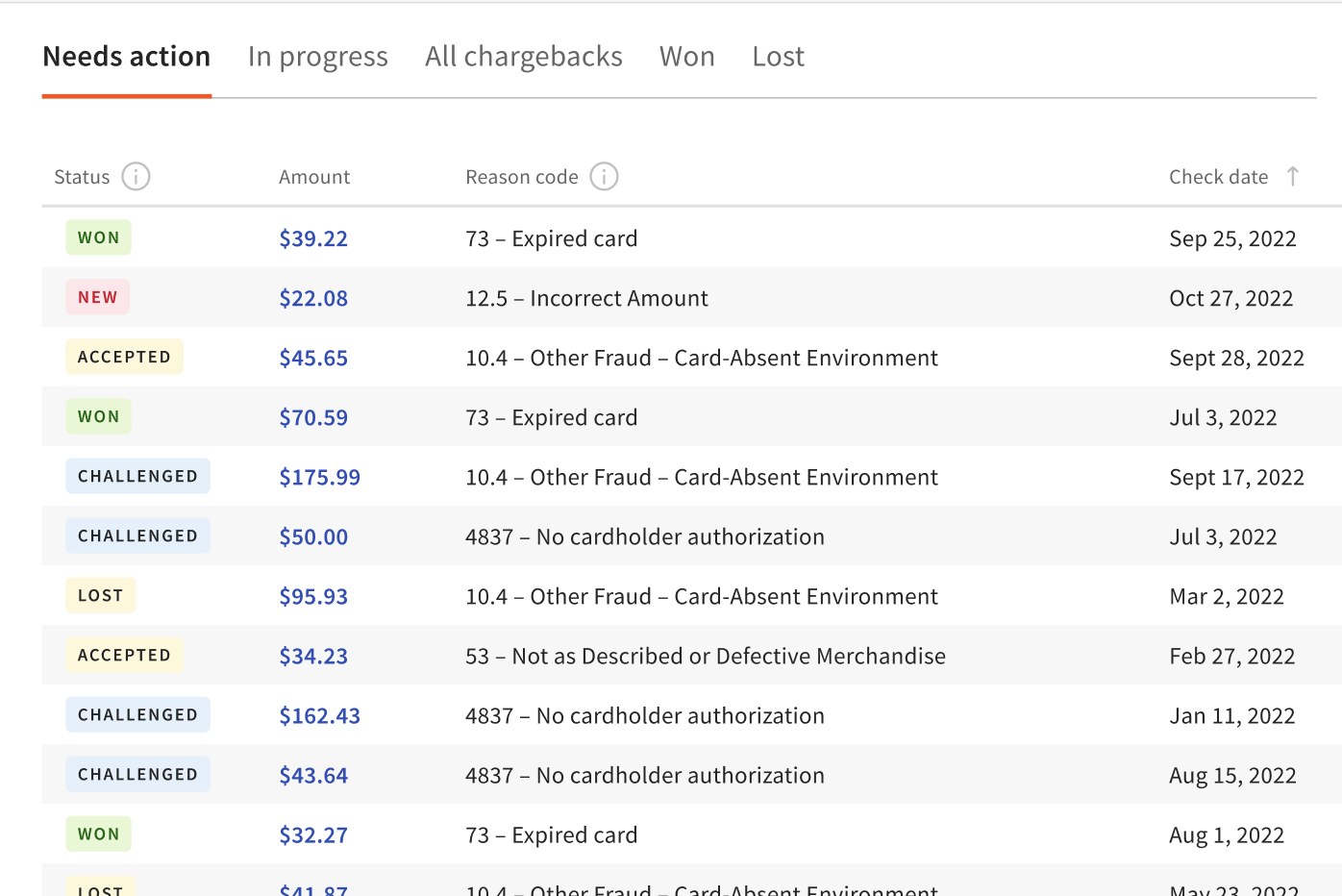
- The Chargeback Challenger dashboard will display your chargebacks, which can be filtered by status or date.
- Select the receipt URL in the chargeback notification email to be taken directly to the digital receipt. You'll have to log into Toast Web to see the information.
- Use the Find Checks tool:
- Find the Draft/Ticket # on your chargeback notification.
- Navigate to the Find Checks tool.
- Navigate to the Find by ID tab.
- Enter the draft number into the Payment Reference Field and select Search to find the check.
How can I unsubscribe from chargeback notification emails?
Select Unsubscribe from chargeback emails for all locations at the bottom of any these emails.
Some of my employees are receiving chargeback notifications when they shouldn’t be. How can I fix this?
If you have employees receiving chargeback notifications when they aren't listed on your Toast Web Communication preferences page, please reach out to Toast Customer Support.
Back to top
Chargeback Explanation Generator (AI) FAQ
What is the chargeback explanation generator?
The chargeback explanation generator is a feature powered by Toast AI that drafts suggested explanations for merchants to use in their chargeback disputes. It provides a starting point based on data available through the chargeback challenger. Customers will see the suggested text in the Explanation box within the chargeback dispute workflow. To learn more, see Dispute Chargebacks in Toast Web.
Why did I lose the chargeback dispute during your explanation?
The AI-generated explanation is intended to provide a helpful starting point, but it is not guaranteed to be successful. Each dispute is unique, and various factors can affect the outcome. It is crucial to review and customize the explanation and provide all necessary supporting documents before submission.
Is Toast liable for my loss in the chargeback dispute because I used the suggested explanation?
No, Toast is not liable for the outcome of your chargeback dispute. The suggested explanation is a tool to assist you, but you are responsible for verifying its accuracy and relevance. You must review and modify it as needed and ensure it meets the requirements of your specific case.
What should I do if the generated explanation is inaccurate?
There is a feedback form at the end of the chargeback challenge process where you can provide information about inaccuracies or inconsistencies with the generated explanations.
How is my information processed when using the chargeback explanation generator?
Your data inputs and the generated outputs may be used to train our AI model. All information is processed in accordance with Toast's Privacy Statement.
Back to top
Processing a Chargeback Notification - $15
Note: The processing fee is charged regardless of whether the charge is disputed or not. Additionally, the fee is charged regardless of whether the chargeback dispute is won or lost.
This fee is intended to cover the cost of transmission of chargeback data, costs associated with the chargeback itself, and coverage against the chargeback exposure against Toast for credit card processing.
This fee is not waived unless it was a result of a known Toast processing outage or a different Toast issue.
If you didn't notice any chargeback fees from your previous processor, those fees were likely built into other fees or costs, such as your overall processing fee, a monthly fee, or a product subscription. Toast strives to be transparent with our fees.
Why did Toast debit my account instead of credit it with my usual daily deposit?
This likely occurred because your total refunds and/or chargebacks in one day exceeded that day's total sales. These are rare occurrences.
Back to top
What are the risks associated with disputing authorization and chip liability shift chargebacks?
Card issuers and card networks deem certain chargeback codes to be nearly indisputable by merchants, and as a result, a merchant can be charged a fee of up to $500 by card networks for submitting a dispute of such chargebacks. In these instances, it may be best practice to refrain from disputing a chargeback that you are unlikely to win and avoid draining your valuable time and resources and incurring additional fees.
Mastercard has determined that the below chargeback codes generally indicate a valid chargeback and are well supported by data from the card issuing bank. This makes them nearly impossible to dispute. If you do choose to dispute these chargebacks, you are putting yourself at risk of incurring additional fees:
- Reason code 4808 – Authorization-Related Disputes
- Reason code 4870 – Chip Liability Shift
- Reason code 4871 – Chip & PIN Liability Shift
Depending on your workflow or third-party integration use, it may curb chargeback risk to have your guest present payment upon pickup so that it can be processed by the more secure EMV chip. You might also try asking for a matching ID to the credit card used, or ask your guest to show the credit card itself upon pickup. Toast is not capable of blocking certain credit card numbers.
If you believe a chargeback on your account involves fraudulent activity, this article will guide you through the process of pursuing the next steps: Fraudulent Chargeback Step-by-Step Guide.
| Visa | 12.6.1 - Duplicate Processing |
| Mastercard | 4834 - Duplicate Processing |
| Discover | DP - Duplicate Processing |
| Amex | P08 - Duplicate Charge |
Unfortunately, issuers (banks) set these codes, and once submitted, it's very unlikely the bank will change the code. It's still worth responding to the chargeback and calling out the incorrect reason code.
The following chargeback reason codes are related to EMV (see
EMV FAQ for more information):
| Visa | 10.1 EMV Liability Shift
10.2 EMV Liability Shift Non-Counterfeit Fraud |
| Mastercard | 4870 - Chip Liability Shift
4871 - Chip/PIN Liability Shift |
| Discover | UA05 - Fraud Chip Card Counterfeit
4871 - Fraud Chip and Pin Transaction |
| Amex | F30 - EMV Counterfeit Transaction
F31 - EMV Lost/Stolen |
Note: Mastercard has a 20% Tip Tolerance when the card isn't present. As of October 13, 2017, card-not-present Mastercard payments will have chargeback protection as long as the tip is 20% or less.
Unlike Visa or Mastercard, American Express does not have an arbitration process. Chargeback dispute timeframes may vary depending on the chargeback reason code.
There is a different set of steps to take when a chargeback is related to a gift card or a prepaid card rather than a credit card. It's important to understand the limitations certain gift cards or prepaid cards have when it comes to tip thresholds. Many prepaid cards only allow for a 20% tip of the authorization amount.
You can upload a JPG, PDF, PNG, or TIFF file to support your challenge to a chargeback. You can upload up to 10 files, with a maximum file size of 1 MB per file.
Back to top